


The Fighters of 1905 memorial is situated just at the edge of the Daugava River, of which Riga is a major port. The view of the river and neighbouring bridge, Akmens Tilts, is great from this spot.
There are plenty of authentic restaurants to choose from in Riga. Latvian food is seasonal, and generally consists of meat (or fish) and veg as standard. Typical of Eastern European food, it is high in fat and not overly spiced.
The city boasts a selection of bars as well. Beer House No. 1 has an unrivalled selection of beers, with over 70 on tap!


Under the control of the USSR, the Eastern Bloc states forbade movement of its citizens post WWII. People were desperate to leave East Germany and were doing so in great numbers, so the Soviets officially closed the border in 1952 and created a boundary, predominantly with barbed wire, that divided East and West Germany.
Part of that border stretched about 43km through Berlin, separating the East from the West, but due to security not being particularly well managed, people could often successfully cross into the West. Approximately 3.5 million East Germans (around 20% of the overall population) had escaped by 1961.

To combat the stream of people trying to leave the occupied East, a concrete wall was constructed through the city in 1961, with death traps on the East side. With a stronger border that was much harder to cross, from 1961-1989 only about 5% of those that attempted escape were actually successful.


Revolutions across the Eastern Bloc, including the peaceful protest dubbed the Pan-European Picnic in 1989, were the catalyst for the socialist group falling. Demolition of the wall began in June 1990 and was celebrated the world over.

While visiting Berlin, you can see smaller remains from the original wall as well as larger pieces still in-tact.


Tourists can even pick up a piece of the wall to take home.


Active for 28 years, Checkpoint Charlie was a prominent border crossing point between East and West Berlin during the Cold War. It was the most visible Berlin Wall checkpoint, named “Charlie” after the NATO phonetic alphabet, and continues to be an iconic memorial to the Berlin Wall.


I really felt the significance of this renowned border crossing while visiting as a tourist, it was a unique experience to be standing where the clashing sides converged.


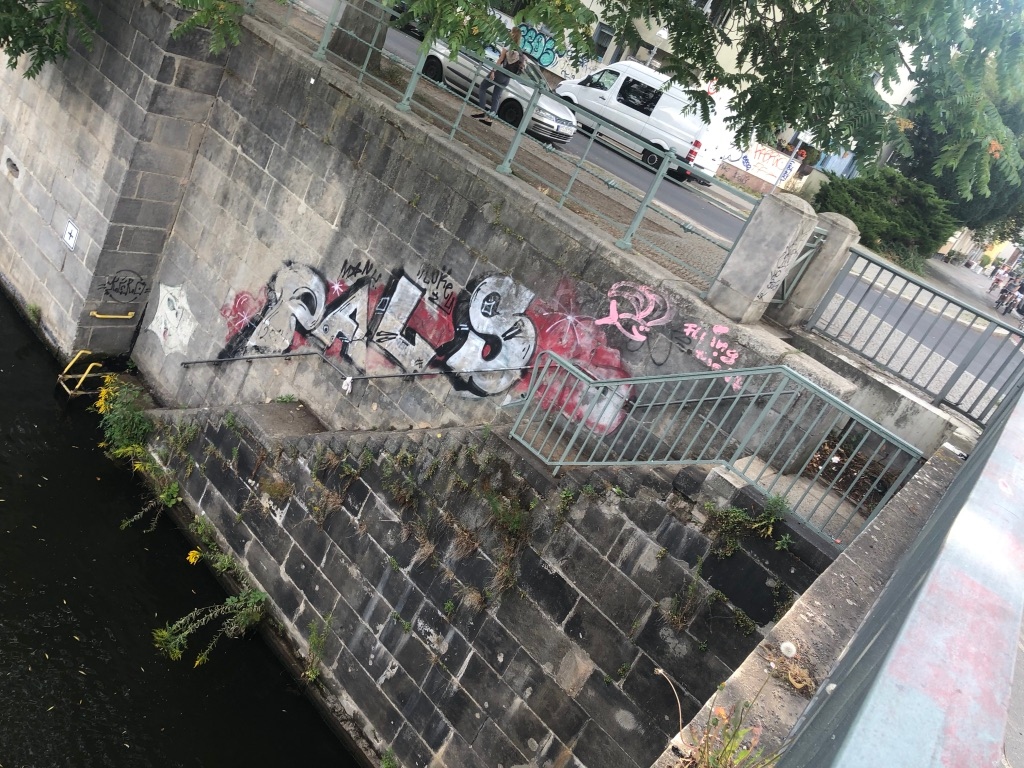
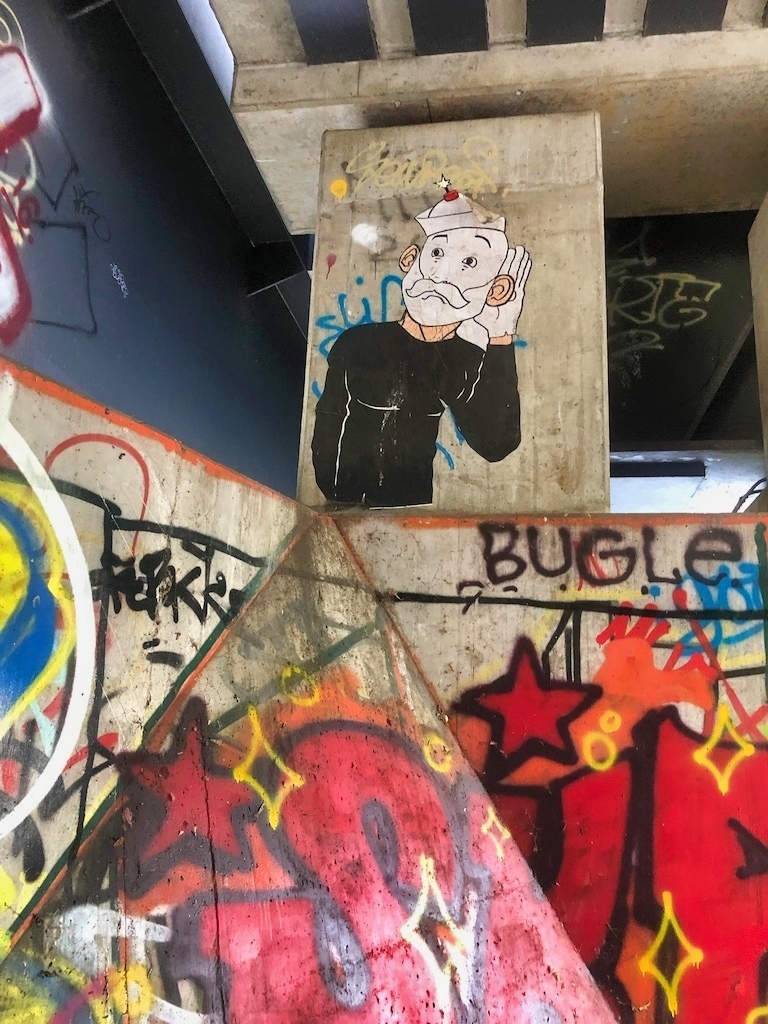
Street art in Berlin began as a small movement in West Berlin in the 1970’s, with people coming in with stencils and spray paint to deface communist property, predominantly with political slogans and statements.
Over time, the art became more colourful and a symbol of liberation.
Among the first artists to paint the wall in the 1980’s was Thierry Noir, who was largely inspired by David Bowie. His iconic art is instantly recognisable.

The city celebrates street art at the East Side Gallery, a permanent open-air gallery positioned on the longest existing stretch of the Berlin Wall.
There is also the Urban-Nation street art museum that features changing exhibits and encourages young local artists.
Street artists from far and wide have ventured to Berlin to contribute to the active art scene that the city embodies. It remains an identifying feature of the UNESCO-named City of Design.


The city celebrates street art at the East Side Gallery, a permanent open-air gallery positioned on the longest existing stretch of the Berlin Wall.
There is also the Urban-Nation street art museum that features changing exhibits and encourages young local artists.
Street artists from far and wide have ventured to Berlin to contribute to the active art scene that the city embodies. It remains an identifying feature of the UNESCO-named City of Design.






The music scene in Berlin is massive. Some of the worlds’ greatest musicians have called Berlin home at some point and its influence permeates the culture there.
It is full of underground music venues, home to countless festivals, concerts and musical events, and while has endless choice for lovers of Opera and Classical music, it is equally the most popular place for techno-lovers to visit in Europe. The diversity is mind blowing.
The punk scene isn’t as prominent today as it once was, but SO36 in Kruezberg was the home to punk rock in the 1970’s and was frequented by musicians such as David Bowie and Iggy Pop.
Bowie’s “Berlin Trilogy”, the three albums he released following his stint living in Berlin, demonstrate the experimental nature of music in the German capital – it is there that he was moved to try out new music genres. Bowie has described living in Berlin a “sanctuary like situation” in large part due to his anonymity there.
He recorded “Heroes” at Hansa Studios (also referred to as “Hansa by the Wall” due to its location) which was also where artists Iggy Pop, Depeche Mode, Nick Cave and the Bad Seeds, U2, REM among many others recorded as well.
U2’s 1991 album Achtung Baby was inspired by the reunification and the wall coming down in Berlin. The album was partially recorded at Hansa Studios. The Trabant (an East German car that became symbolic of the collapse of the Eastern Bloc) featured on the album sleeve.

The band Spandau Ballet was also inspired by Berlin. The Spandau Machine Gun was developed in Spandau, a borough of the city that housed an arsenal. It inspired a slang term, “Spandau Ballet”, which referred to soldiers dying from its shot. A friend of the band, which was known as Gentry at the time, saw the name on a trip to Berlin and recommended the band rename itself following a decision to take on a new musical direction.

Pink Floyd played The Wall – Live in Berlin on 21 July 1990 to commemorate the fall of the Berlin Wall in a vacant space near the Brandenburg Gate. The show had a sell-out crowd of 350,000 people.

Music continues to be a cornerstone of Berlin’s culture and inspires artists the world over.


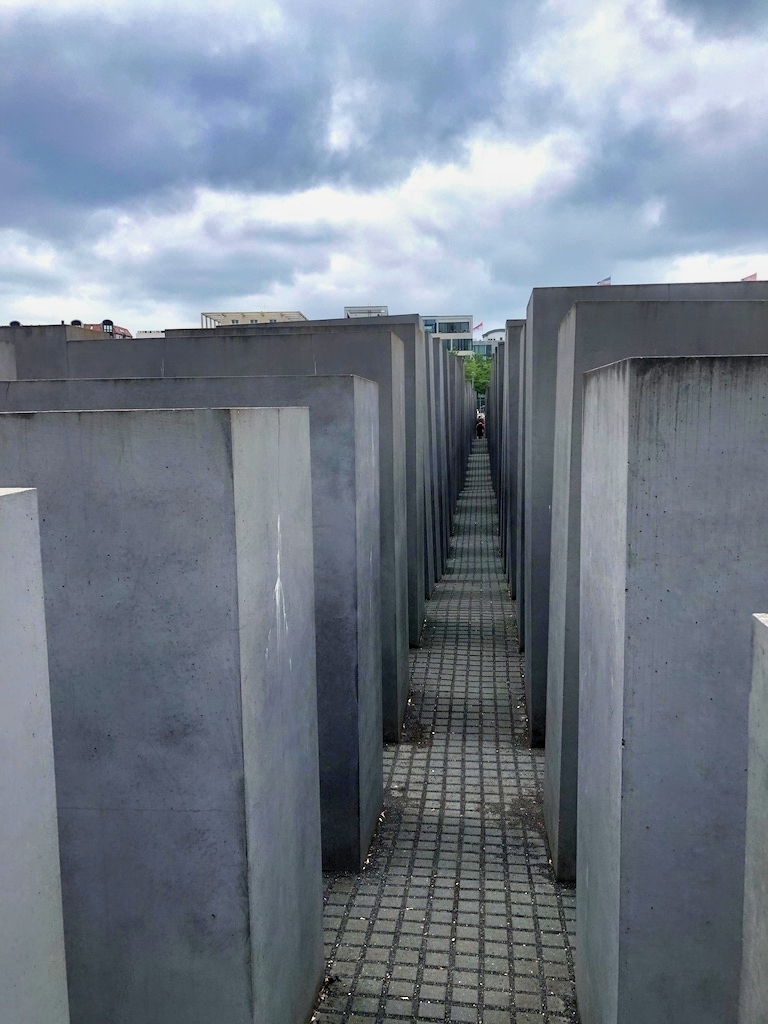
Located in the centre of the city, Berlin’s Holocaust Memorial, also known as the Memorial to the Murdered Jews of Europe, is a big tourist attraction, taking in 1,000 visitors per day on average.
The memorial is comprised of 2,711 concrete slabs, and took over a decade to come to fruition, with the first concepts for it being discussed in 1994. The last slab was laid on the 15th of December 2004 and the memorial officially opened to the public in May 2005.
It has been a controversial site in part because the anti-graffiti product that was used to protect the slabs from vandalism was made by a subsidiary of the company that produced the poisonous gas used to kill in the gas chambers.

The information centre that sits below the memorial has a room of families and a room of names that personalise the tragedy.
Walking through the maze of slabs is quite an experience. You can feel the gravity of the Holocaust on the Jewish population in Berlin, which pre-WWII, was one of the biggest in Europe.


The German Spy Museum is in an ideal location for tourists (very close to the Brandenburg Gate, among other landmarks) and lies on the previous division of East and West Berlin.
The building itself is fascinating alone, being modelled after the “bridge of spies” or Glienicher Bridge, which was used to exchange spies from East and West during the Cold War.


This museum is a great place to visit and divulges espionage stories and tactics through immersive and educational exhibitions and artifact displays.
It predominantly focuses on World War I, World War II and the Cold War, but also features espionage in movies and displays lots of props from the likes of James Bond.


Bubble-O-7 even made an appearance!


Berlin’s iconic Tempelhof Airport holds both historic and cultural significance.
A pre-World War II airport, and one of the worlds’ busiest, it could handle the biggest aircraft of its time and accommodated both military and commercial jets.
Controversially, despite a heavily protested closure, Tempelhof ceased operation in late 2008, following an unfavourable referendum earlier that year. It had an impressive closing ceremony known as the “Goodbye Templehof” Gala.

It is now a recreational area known as Templehofer Feld and is the largest inner-city open space in the world. The disused terminal and hangars are now used to house refugees (who are free to come and go as they please) and the city park is used for a variety of events, sport, and activities such as cycling and flying kites.
Not only do humans benefit from this transformed place, so does the wildlife (it’s now home to many threatened bird, plant, and insect species). It is also the heart of Berlin’s Creative District.


Visiting this old airport was a great day out and is a real testament to Berliners as they chose to reallocate the grounds for uses other than commercial that have a real benefit to the local community.
Follow Me